Thinking about buying land near Llano or the Highland Lakes? A beautiful view can be the easy part. The harder part is knowing whether a tract has the access, utilities, floodplain status, and restrictions that fit your plans. If you want to make a smart land purchase in the Llano area, this guide will help you focus on the details that matter most. Let’s dive in.
Why Buyers Look Near Llano
Llano County draws buyers who want more space, natural scenery, and a different pace than a standard neighborhood lot can offer. The county is closely tied to the Llano River, rugged granite landscapes, ranching traditions, agriculture, tourism, and small businesses.
For many buyers, the appeal is both lifestyle and flexibility. You may be looking for a future homesite, a weekend retreat, a place near the water, or land that gives you more room to spread out. In this part of the Hill Country, those goals often start with acreage.
The nearby Highland Lakes add another layer of interest. The chain includes Lake Buchanan, Inks Lake, Lake LBJ, Lake Marble Falls, Lake Travis, and Lake Austin, and these lakes have long supported recreation and water supply in Central Texas.
Start With Access And Roads
Before you fall in love with the land itself, look closely at how you get to it. Rural tracts near Llano may be reached by a county road, a private subdivision road, or a shared easement, and that difference can shape both convenience and long-term upkeep.
Llano County subdivision rules state that roads maintained by the county must meet county-road standards. The rules also require subdivision review before road or utility work in the roadway, and they note that emergency vehicles must be able to pass unobstructed from the public road.
That means access is not just a map question. You want to know who maintains the road, whether the route is reliable in wet weather, and whether your intended use depends on easement rights or private road arrangements.
Questions To Ask About Access
- Is the property on a county-maintained road, private road, or easement?
- Who is responsible for road maintenance?
- Is emergency access clear and usable from the public road?
- Will future road or utility work require subdivision or county review?
Check Floodplain Status Early
In the Llano area, water adds beauty and recreational value, but it also adds risk and regulation. This is especially important if you are considering land near the Llano River, a creek, a low-water crossing, or one of the lakes.
Llano County’s transportation plan states that the county has 228 low-water crossings, with 111 located in the 100-year floodplain. The county also reports that FEMA flood maps effective January 21, 2021 cover about 43 percent of county land area.
Even if a tract is not directly on the riverbank, floodplain review still matters. A parcel may appear usable at first glance but still require extra planning, engineering, or permitting before development can begin.
Llano County requires a floodplain development permit before work starts in a special flood hazard area. Development Services also notes that separate review and approval from other local, county, state, or federal offices may be required before a permit is issued.
Why Floodplain Review Matters
- It can affect where you build
- It can change site work and drainage plans
- It may add permit requirements before clearing or grading
- It can influence access during heavy rain events
Understand Utilities Before You Buy
One of the biggest differences between land inside the City of Llano and rural acreage outside town is utility service. Inside city limits, the City of Llano provides water and wastewater services and treats surface water from the Llano River.
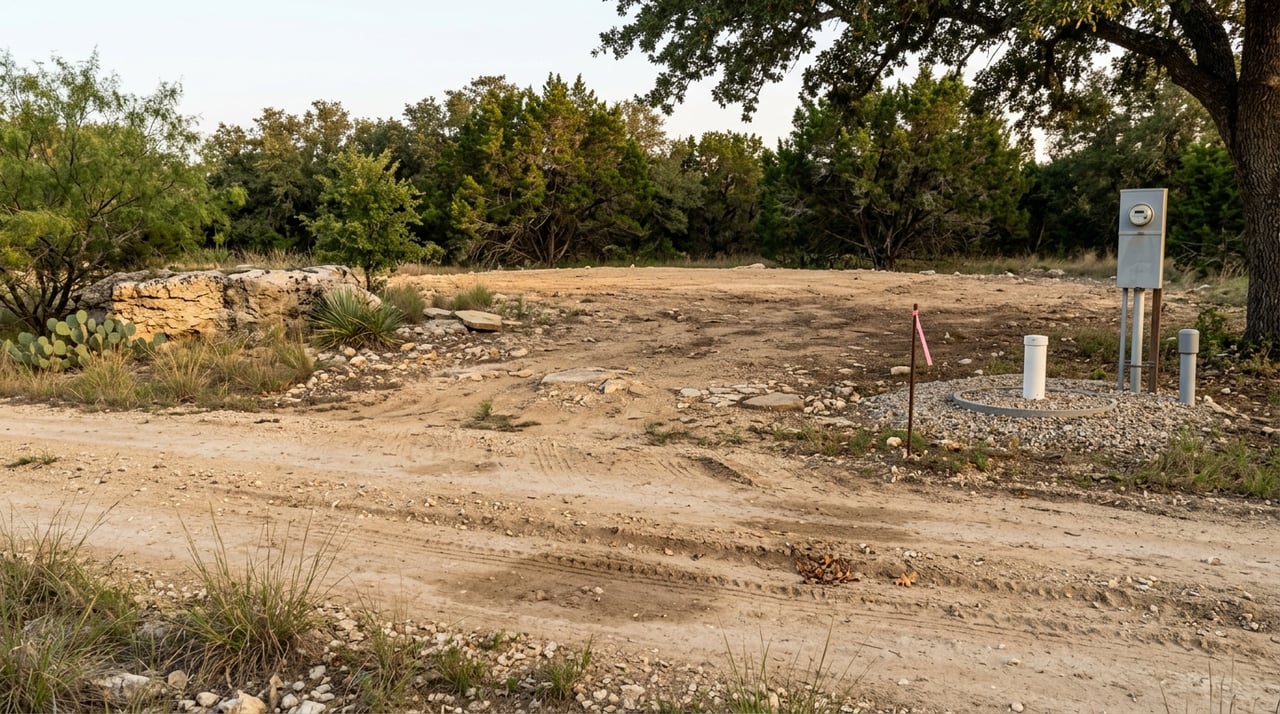
Outside the city, the setup can be very different. Many rural tracts require buyers to verify whether city water and sewer are available or whether the land will need a private well and an on-site sewage facility.
That is why “utilities available” should never be assumed. You want to confirm service, location, capacity, and the steps needed to make the tract functional for your plans.
Wells And Septic In Rural Areas
Texas requires water wells to be drilled by licensed well drillers and pump installers. For septic, Llano County has a permit-to-construct process for private sewage facilities.
In practical terms, that means a rural tract may need added time and budget for soil evaluation, permitting, and installation before it is ready for a home or other improvements. A property can look buildable on paper and still require meaningful work to become truly build-ready.
Hill Country Terrain Can Limit Usable Land
Acreage numbers do not always tell the full story. In Llano County, terrain can be one of the biggest surprises for buyers who are used to flatter land.
County and state geological sources describe the area as granite-rich, with igneous and metamorphic rock tied to the Llano Uplift. USDA soil data for a Llano County soil series also shows shallow soils formed in granite residuum.
For you as a buyer, that can affect more than just appearance. Terrain and soils may influence where a driveway can go, where septic fields can be placed, and how much of the property feels practical for building or daily use.
What To Evaluate On Site
- Slope and elevation changes
- Rock outcrops and shallow soil areas
- Possible driveway routes
- Likely homesite options
- Space for septic components
- Overall usable area versus total acreage
Review Restrictions And Records Carefully
Do not assume rural land is unrestricted. Some parcels have fewer limitations than a typical subdivision lot, but many still come with recorded plats, deed restrictions, easements, or subdivision rules that shape what you can do.
Inside the City of Llano, land use questions go through the Planning and Zoning Commission. Outside the city, buyers should review the recorded plat, deed restrictions, easements, and county records before closing.
Texas law requires subdivision plats to be filed with the county clerk, and restrictive covenants may be recorded in the deed, map, or real property records. Llano County’s clerk provides public records access and an online search portal.
This is one of the most important parts of land due diligence. If you hope to build, divide, access the water, or use the property in a specific way, the records need to support that plan.
Mineral Rights Are A Separate Issue
In Texas, buying land does not always mean buying everything under it. The Railroad Commission of Texas states that Texas recognizes separate surface and mineral estates, and a sale of the surface estate may or may not include mineral rights depending on the deed language.
Texas A&M AgriLife also notes that a buyer may not receive mineral rights automatically. That makes title review especially important in rural land transactions.
If mineral ownership matters to you, it should be confirmed in the deed and title work before closing. This is not something you want to discover after the purchase.
Compare Property Taxes By Tract
Two similar-looking parcels near Llano can have very different annual costs. Llano Central Appraisal District appraises property for local governing bodies, and the county’s property-tax directory shows that land may be taxed by different combinations of the county, school districts, cities, municipal utility districts, road districts, water-control districts, and emergency services districts depending on location.
That means tax estimates should be part of your early comparison, not an afterthought. Carrying costs can influence whether a tract still makes sense once you factor in your long-term plans.
Tax Questions To Ask
- Which taxing units apply to this tract?
- Is the parcel inside city limits or outside them?
- How do annual taxes compare with similar nearby land?
- What will your holding costs look like if you wait to build?
Lake Proximity Can Add Value And Complexity
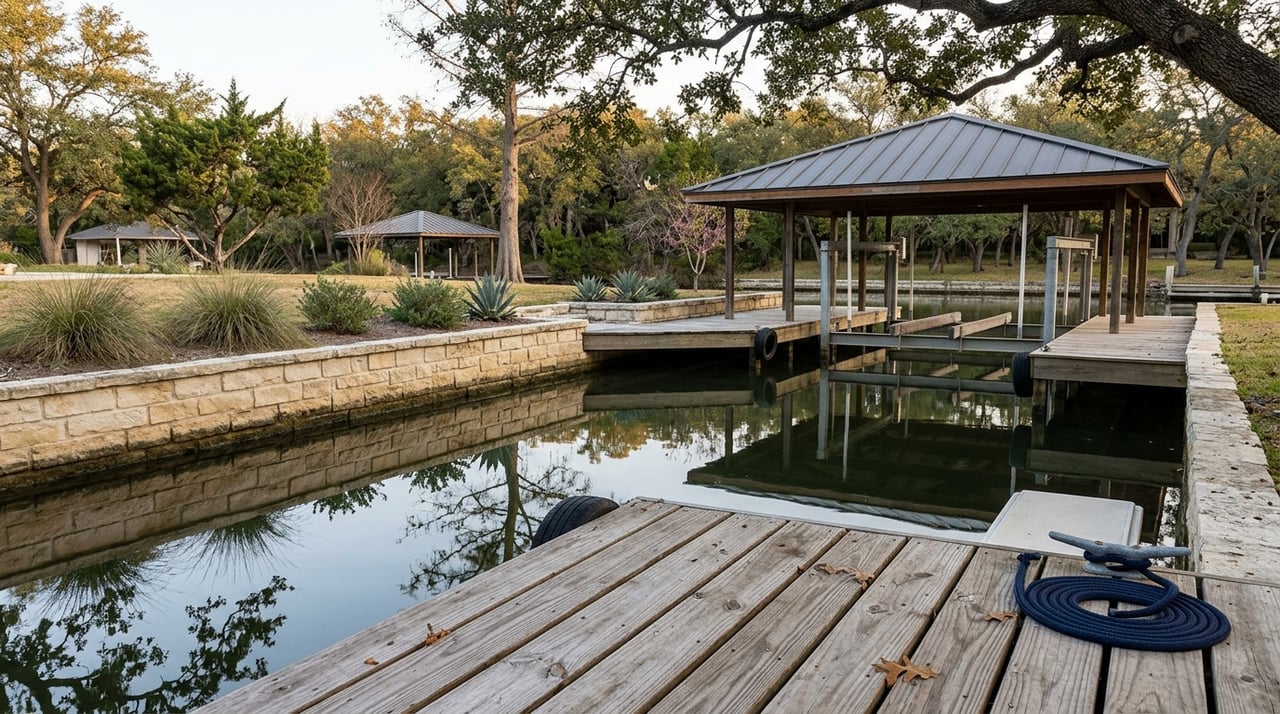
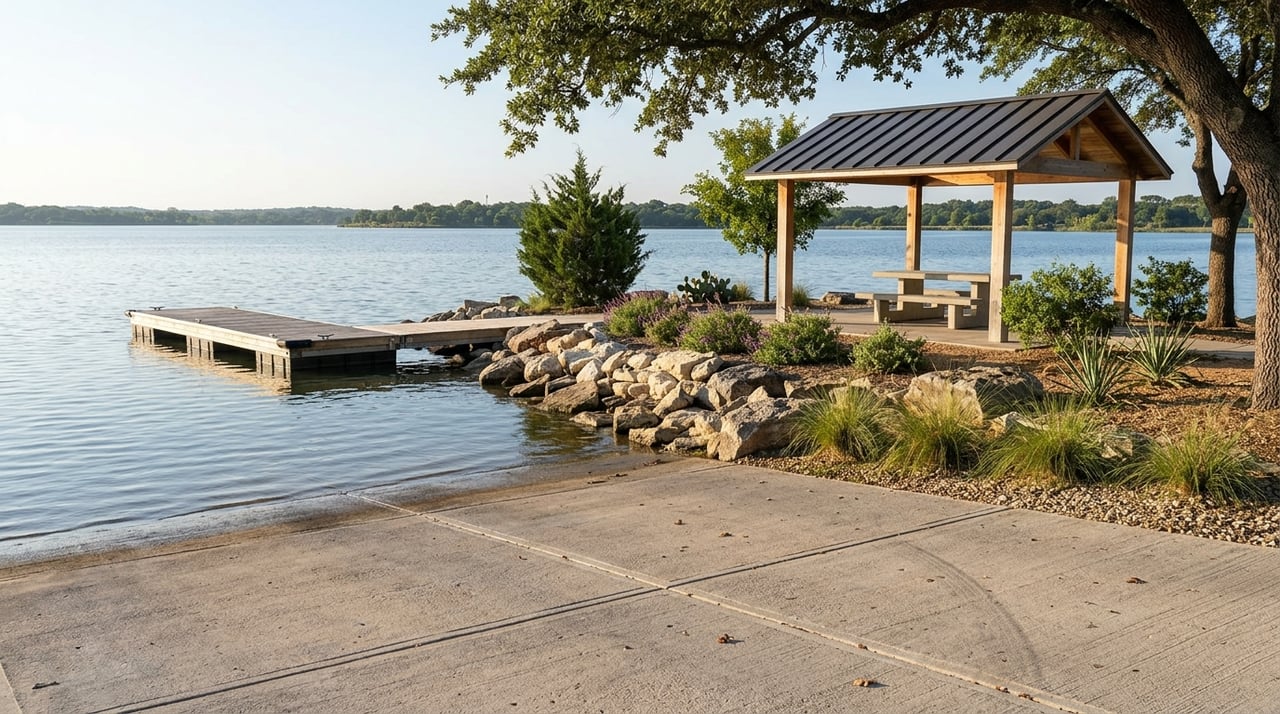
Land near the Highland Lakes often attracts buyers because of boating, swimming, views, and the overall lake lifestyle. Proximity to the water can increase enjoyment, but not all lake-adjacent parcels offer the same ownership experience.
LCRA notes that the Highland Lakes support recreation across the region. Research cited in the report also found that lakefront and dockable properties tend to command premiums, with value generally declining as distance from the shoreline increases. One waterfront study found that the ability to build and use a dock created a substantial premium compared with properties that were not dockable.
At the same time, water-adjacent property can bring more rules and maintenance. LCRA says pass-through lakes can occasionally be lowered for vegetation control and for dock or retaining-wall repairs, and land-disturbing work in part of Llano County may fall under the Highland Lakes Watershed Ordinance and require LCRA authorization.
For many buyers, the best land is not simply the closest to the shoreline. It is the parcel with the right mix of access, elevation, usability, and clear permissions for how you want to enjoy it.
A Smart Land-Buying Checklist
Before you buy land near Llano and the lakes, focus on these core items:
- Verify road access and maintenance responsibility
- Review floodplain maps and low-water crossing risks
- Confirm water, wastewater, well, or septic needs
- Evaluate terrain, rock, and usable building area
- Check plats, easements, deed restrictions, and county records
- Confirm whether mineral rights are included
- Compare applicable taxing units and annual carrying costs
- Review lake-related rules if the tract is near the shoreline or watershed areas
Why Local Insight Matters
Buying land in the Llano area is rarely just about acreage size or a pretty view. It is about how the property functions in real life, from road access and flood exposure to lake permissions and buildability.
That is where local guidance can make a real difference. When you compare tracts through the lens of usability, water access, terrain, and local process, you can avoid spending time and money on land that does not fit your goals.
If you are considering lots, land, or lake-area property in the Highland Lakes region, Lake Homes Team Bruce Jones can help you compare options with a practical, local perspective.
FAQs
What should you check first before buying land near Llano, TX?
- Start with access, floodplain status, utilities, and recorded restrictions, because those issues often shape whether the tract fits your plans.
What utility questions matter for rural land near Llano and the lakes?
- You should verify whether the property has city water and wastewater service or will need a private well and an on-site sewage facility with county permitting.
What floodplain issue matters when buying land near the Llano River?
- Even parcels that are not directly on the river can be affected by floodplain rules, low-water crossings, and permit requirements for work in special flood hazard areas.
What records should you review before buying acreage in Llano County?
- You should review the recorded plat, deed restrictions, easements, and other county records to confirm what uses, access rights, and limitations apply.
What should you know about mineral rights when buying land in Texas?
- In Texas, surface and mineral estates can be separate, so mineral rights are not automatically included and should be confirmed in the deed and title work.
What makes lake-adjacent land near Llano different from other acreage?
- Lake-adjacent land may offer stronger recreation and view value, but it can also involve added shoreline, watershed, dock, elevation, and permitting considerations.